How to Build a Private Label Synthetic Wig Care Product Line
Synthetic wigs have become an important category for beauty retailers, salons and online brands. They give customers an accessible way to change color, length and texture, but the sale should not end with the wig itself. Customers also need suitable products to clean, condition and maintain it.
For brands, a synthetic wig care line can create repeat purchases and make the original wig offering feel more complete. The challenge is that synthetic fibers do not behave like natural hair. Ordinary shampoo, heavy conditioner or rich hair oil may leave residue, increase tangling or make the wig feel heavy. A successful range therefore needs to be developed specifically around synthetic-fiber maintenance.
Begin with a Clear Customer
Before discussing formulas or bottles, decide who the range is for.
A line developed for everyday wig wearers may require a different fragrance, size and price point from one intended for professional salons. Curly synthetic wigs may also need a different maintenance routine from straight styles.
Useful questions include:
Is the range for synthetic wigs only or for both synthetic and human-hair wigs?
Will customers use the products at home or in a salon?
Are tangling, static, odor or dull appearance the main concerns?
Will the products be sold individually or as a complete kit?
Does the target market prefer fragrance-free or fragranced products?
Trying to serve every type of wig wearer with one general product line can make the message unclear. A defined customer and use situation will make decisions about formula, packaging and communication much easier.
Start with Three Essential Products
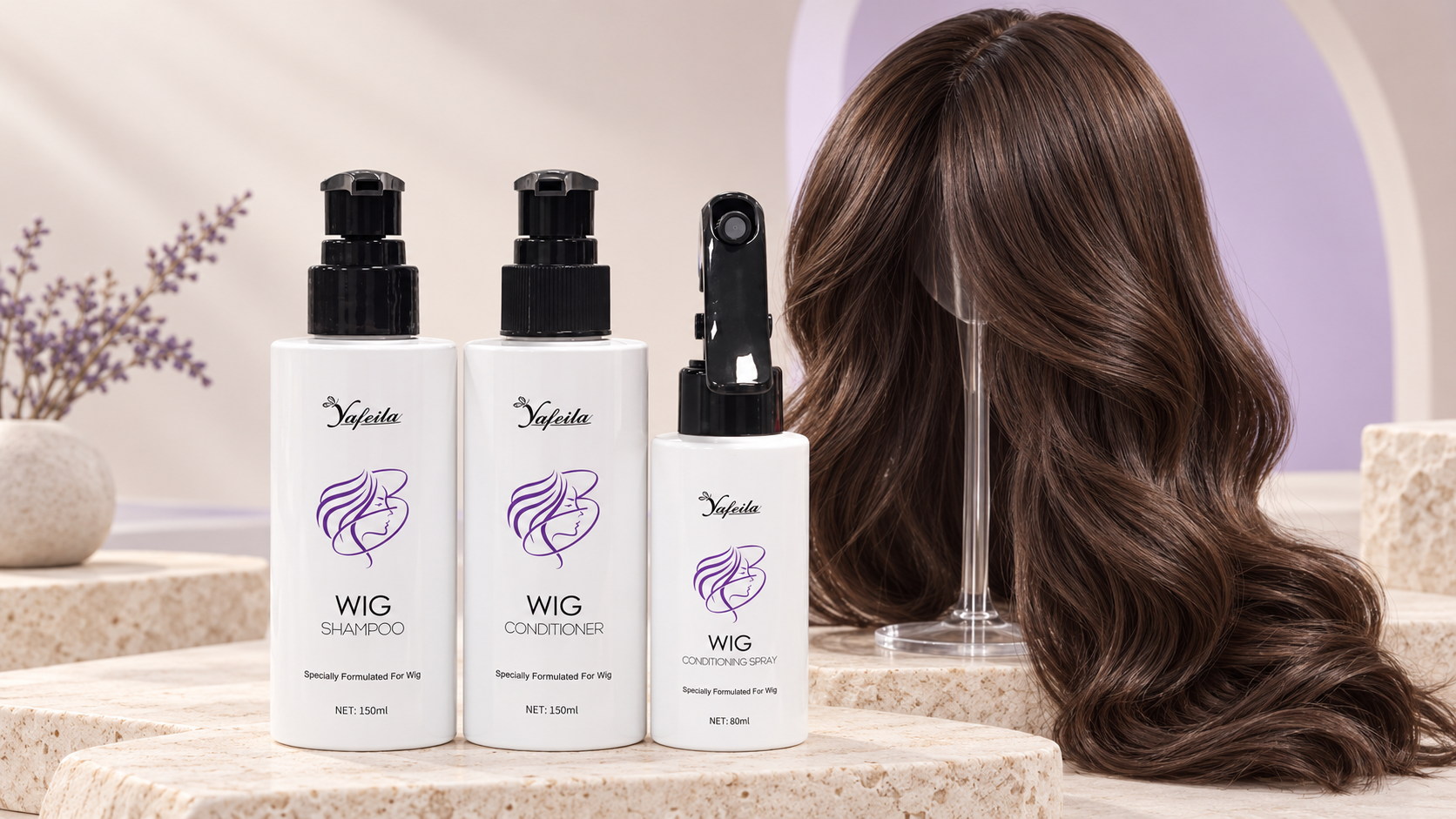
One mistake new brands often make is launching too many products before learning what customers actually use. For a first collection, shampoo, conditioner and a daily conditioning spray usually provide a practical and complete routine.
Synthetic Wig Shampoo
The shampoo should remove dust, perspiration and light product buildup without leaving the fibers stiff or heavily coated. Mild cleansing, controlled foam and easy rinsing are more useful than an aggressive “deep cleansing” message.
The directions are also important. Customers should be told to use cool or lukewarm water, avoid rubbing or twisting the wig, and rinse it carefully. Good instructions reduce misuse and improve the experience of the product.
Synthetic Wig Conditioner
A wig conditioner should leave the fibers feeling smoother and easier to manage after washing. For synthetic wigs, a lightweight formula is generally more suitable than an oil-rich conditioner developed for very dry natural hair.
The objective is not to claim that the conditioner permanently repairs damaged fibers. More realistic benefits include helping reduce tangling during combing, improving manageability and maintaining a smoother appearance.
Brands can choose between rinse-out and leave-in formats. If both are included in the range, their functions must be clearly separated on the packaging.
Wig Detangling and Conditioning Spray
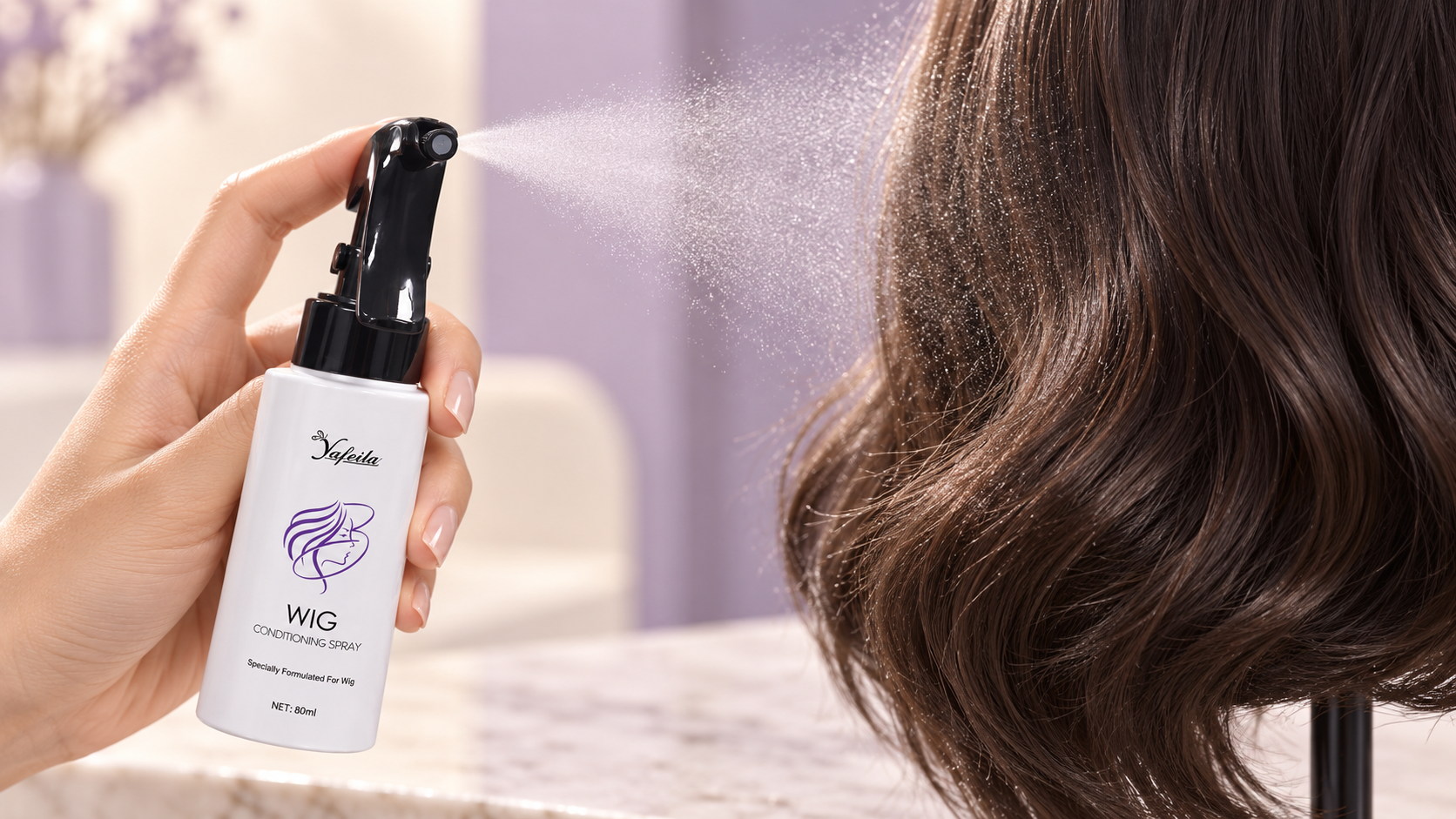
A conditioning spray is often the product customers use most frequently. It can refresh the wig between washes, reduce static and make gentle combing easier.
The formula should feel light and dry without leaving excessive shine or sticky residue. The sprayer must also produce a fine, even mist. During development, we sometimes find that a suitable formula is paired with the wrong pump, causing large droplets or uneven coverage. For that reason, the spray bottle and formula should always be tested together.
These three products create an easy routine that customers can understand:
Cleanse, condition and refresh.
Once the core line performs well, the brand can consider travel kits, deodorizing mist, fragrance-free options, curl-refreshing spray or professional salon sizes.
Develop the Products as One System
The three formulas should not be evaluated separately. They need to work together.
A shampoo that leaves too much residue can affect the performance of the conditioner. A rich conditioner may make the daily spray unnecessary or cause buildup after repeated use. Fragrances that seem pleasant individually may become overpowering when several products are used during the same routine.
During sampling, test the complete system on representative synthetic wigs:
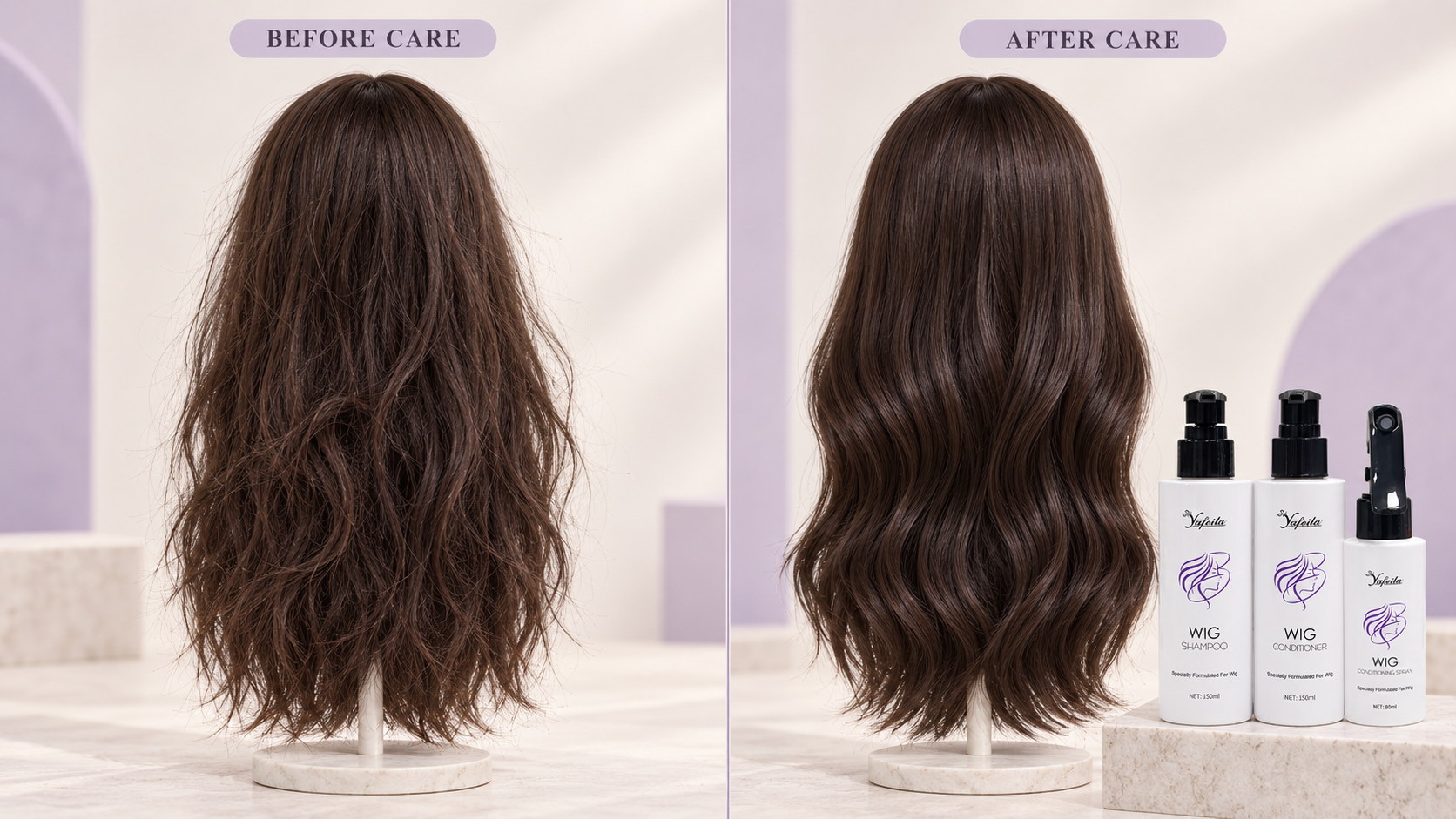
1. Wash the wig with the proposed shampoo.
2. Apply and rinse the conditioner according to the directions.
3. Allow the wig to dry naturally.
4. Use the conditioning spray while gently detangling.
5. Evaluate the fiber feel, appearance, fragrance and residue.
6. Repeat the routine to check whether buildup develops over time.
It is also useful to test more than one wig style. Straight, curly and heat-resistant synthetic fibers may not respond in exactly the same way. Testing representative samples gives the brand a more reliable basis for its directions and claims.
Choose Packaging That Works in Daily Use
Packaging should look consistent with the brand, but function comes first.
For shampoo and conditioner, flip-top bottles, disc-top closures and pumps are all possible. The best option depends on the formula thickness, product size and intended retail position.
For a conditioning spray, evaluate the mist quality, coverage, pump durability and leakage resistance. The bottle should be comfortable to hold, and the cap should remain secure during shipping. Labels should also resist moisture because these products are likely to be used near a sink or washing area.
The front label does not need to carry every detail. A clear hierarchy is usually more effective:
Brand name
Product name
One or two main benefits
Net contents
Directions, ingredients, warnings and responsible-party information can be placed on the back label or carton according to the requirements of the target market.
Use Realistic Product Claims
Synthetic wig products should be promoted with language that accurately reflects their role in routine maintenance.
Suitable claim directions include:
Gently cleanses synthetic wig fibers
Helps reduce tangling during combing
Leaves fibers feeling smoother and more manageable
Lightweight conditioning without a heavy, greasy feel
Helps refresh the appearance of wigs between washes
Fine-mist application for even coverage
Avoid claims such as “permanently repairs synthetic fibers,” “completely eliminates tangles” or “makes every wig look new instantly.” Synthetic fibers cannot biologically repair themselves, and performance can vary according to fiber type, wig condition and user habits.
Clear, supportable language gives the product greater credibility and reduces the risk of creating expectations the formula cannot meet.
Test Before Mass Production
A sample may perform well during the first review but behave differently after storage, transport or repeated use. Before production, brands should discuss appropriate evaluations with their manufacturer.
Depending on the formula and market, this may include:
Formula stability evaluation
Microbiological testing
Packaging compatibility testing
Leakage and pump-performance checks
Label adhesion testing
Fragrance and color stability
Use testing on representative synthetic fibers
Packaging compatibility deserves particular attention. A fine-mist pump may work correctly at first but become blocked if the formula is too thick. A label may also lift at the edges after repeated contact with moisture. Finding these problems during sampling is much less expensive than correcting them after mass production.
Plan How the Line Will Be Sold
A three-product synthetic wig care set can be sold as individual products or as a complete maintenance kit. The kit format is especially useful for wig brands because it gives customers one clear routine and can increase the value of the original wig purchase.
Possible sales formats include:
Individual retail products
Three-piece starter kits
Travel-size maintenance kits
Wig-and-care bundles
Professional salon sizes
Wholesale cartons for beauty supply stores
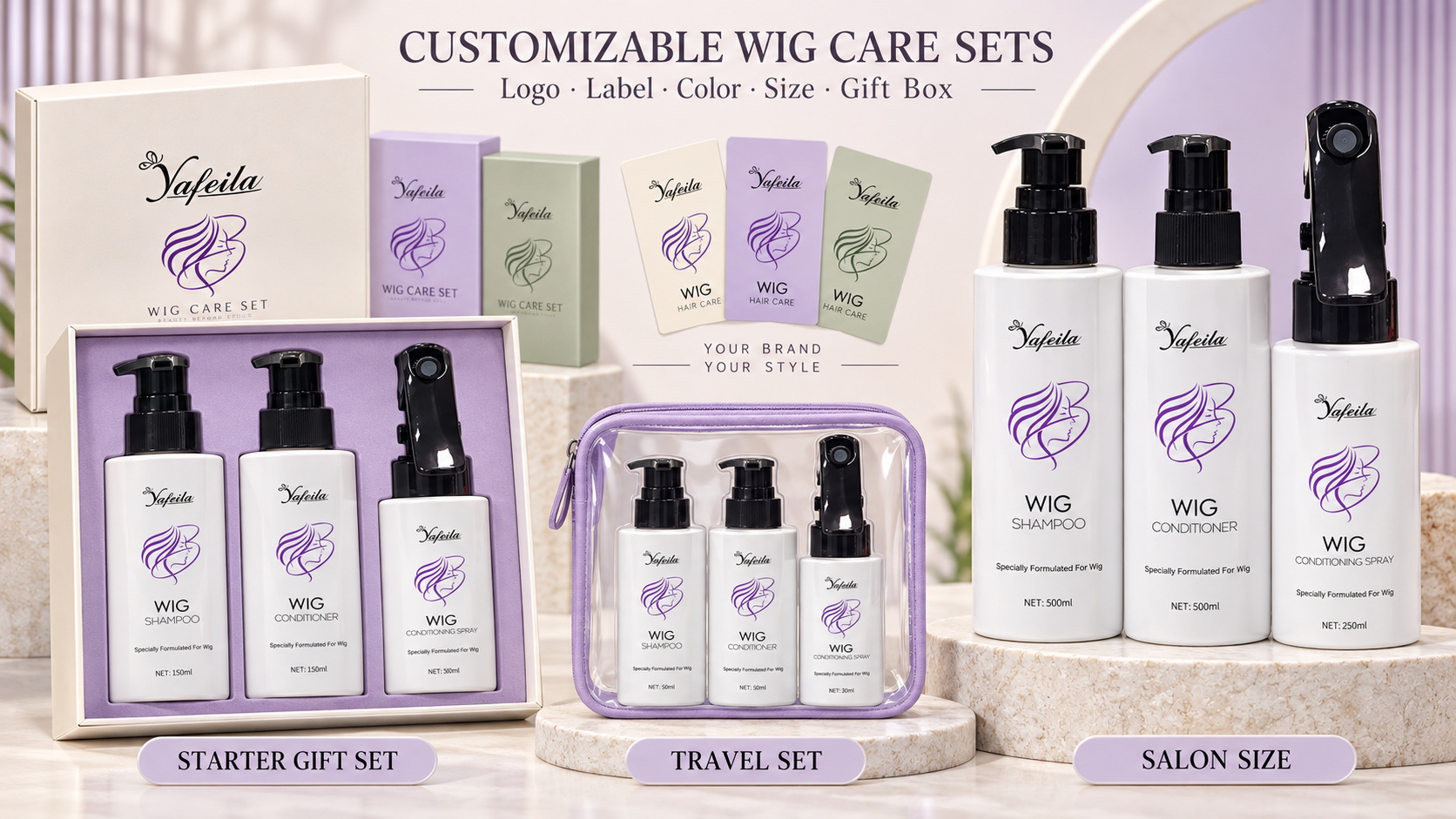
Product sizes and packaging should match the intended channel. A compact spray may work well for online retail and travel, while professional salons may prefer larger shampoo and conditioner bottles.
Work with a Manufacturer That Understands Wig Care
A synthetic wig care range should not be treated as an ordinary shampoo project. When selecting an OEM, ODM or private-label manufacturer, ask about experience with wig care formulas, synthetic-fiber testing, fine-mist packaging, sample revision and export documentation.
An existing formula can help shorten the development schedule and control the starting cost. A customized formula offers more flexibility in fragrance, texture, conditioning level and market positioning. The right route depends on the brand’s budget, order quantity and desired level of differentiation.
The most practical first launch is often a focused system rather than a large collection: a mild shampoo, a lightweight conditioner and a daily detangling spray. When the formulas work together, the packaging performs reliably and the instructions reflect real wig-care habits, the range becomes easier for customers to understand and trust.
Yafeila and YiMing provide OEM, ODM and private-label support for synthetic wig shampoo, conditioner, conditioning spray and coordinated wig care sets. Customization options can include formula selection, fragrance, texture, packaging, label design, sampling and mass production.
Explore our wig care products or contact our team to discuss a synthetic wig care line for your market.