Argan Oil vs Jojoba Oil: Which Hair Oil Fits Your Hair Type?
Argan oil and jojoba oil are both popular in hair serums, masks and leave-in treatments. They can help hair feel softer and look smoother, but they do not provide exactly the same finish.
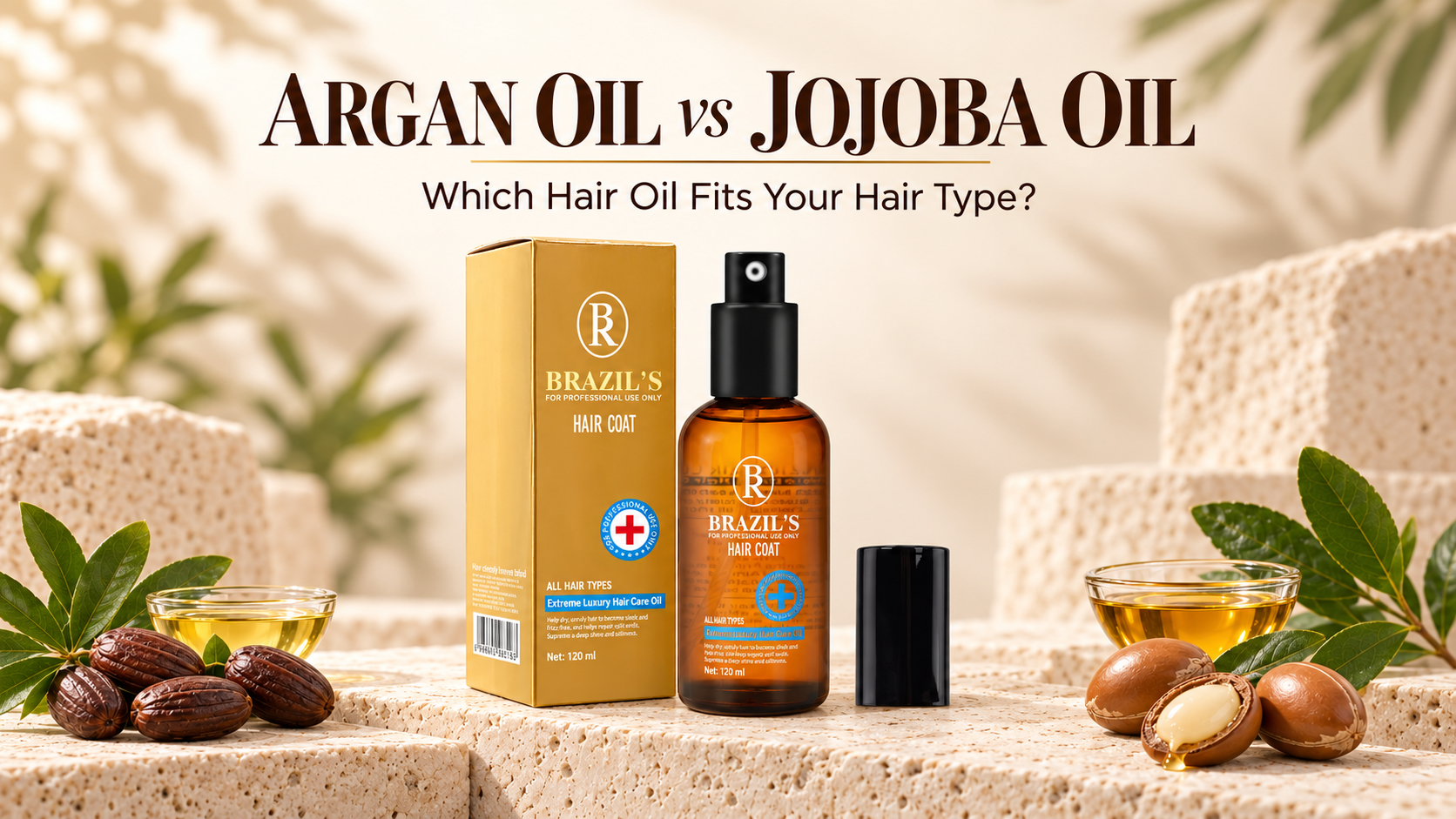
Argan oil is a traditional plant oil rich in fatty acids and naturally occurring vitamin E. Jojoba oil is technically a liquid wax made mainly from wax esters.
In practical terms, argan oil usually feels richer, while jojoba oil is often chosen for lighter hair care formulas. The right choice depends on your hair type, how much product you use and where you apply it.
What Is Argan Oil?
Argan oil comes from the kernels of the Moroccan argan tree. It is commonly used in products for dry, coarse, curly or chemically treated hair.
When used in a suitable amount, argan oil can help:
Soften dry-feeling hair
Smooth the appearance of frizz
Add natural-looking shine
Make hair easier to manage
Its richer texture makes it especially useful on the mid-lengths and ends. Thick or very dry hair may benefit from a few drops, while fine hair usually needs much less.
Argan oil can improve the appearance and feel of damaged hair, but it should not be described as permanently repairing the internal hair structure.
What Is Jojoba Oil?
Jojoba oil is extracted from jojoba seeds. Unlike most plant oils, it consists mainly of liquid wax esters.
It has a smooth, spreadable texture and is often used in lightweight serums, scalp oils, conditioners and leave-in products.
Jojoba oil can help:
Condition the hair surface
Reduce a rough or dry feel
Add light shine
Improve combability
Soften dry-looking ends
Although jojoba oil is often considered lighter than argan oil, the finished feel still depends on the complete formula. A product blended with heavier oils may feel rich even when it contains jojoba oil.
Argan Oil vs Jojoba Oil
|
Feature |
Argan Oil |
Jojoba Oil |
|
Ingredient type |
Plant oil |
Liquid wax ester |
|
Typical feel |
Richer and more nourishing |
Smooth and relatively lightweight |
|
Finish |
More noticeable shine |
Soft, natural-looking shine |
|
Best application |
Mid-lengths and ends |
Scalp, lengths or ends |
|
Often suits |
Dry, coarse, curly or treated hair |
Fine, normal or easily weighed-down hair |
These are general guidelines. The complete formula and the amount applied matter just as much as the featured oil.
Which Oil Fits Your Hair Type?
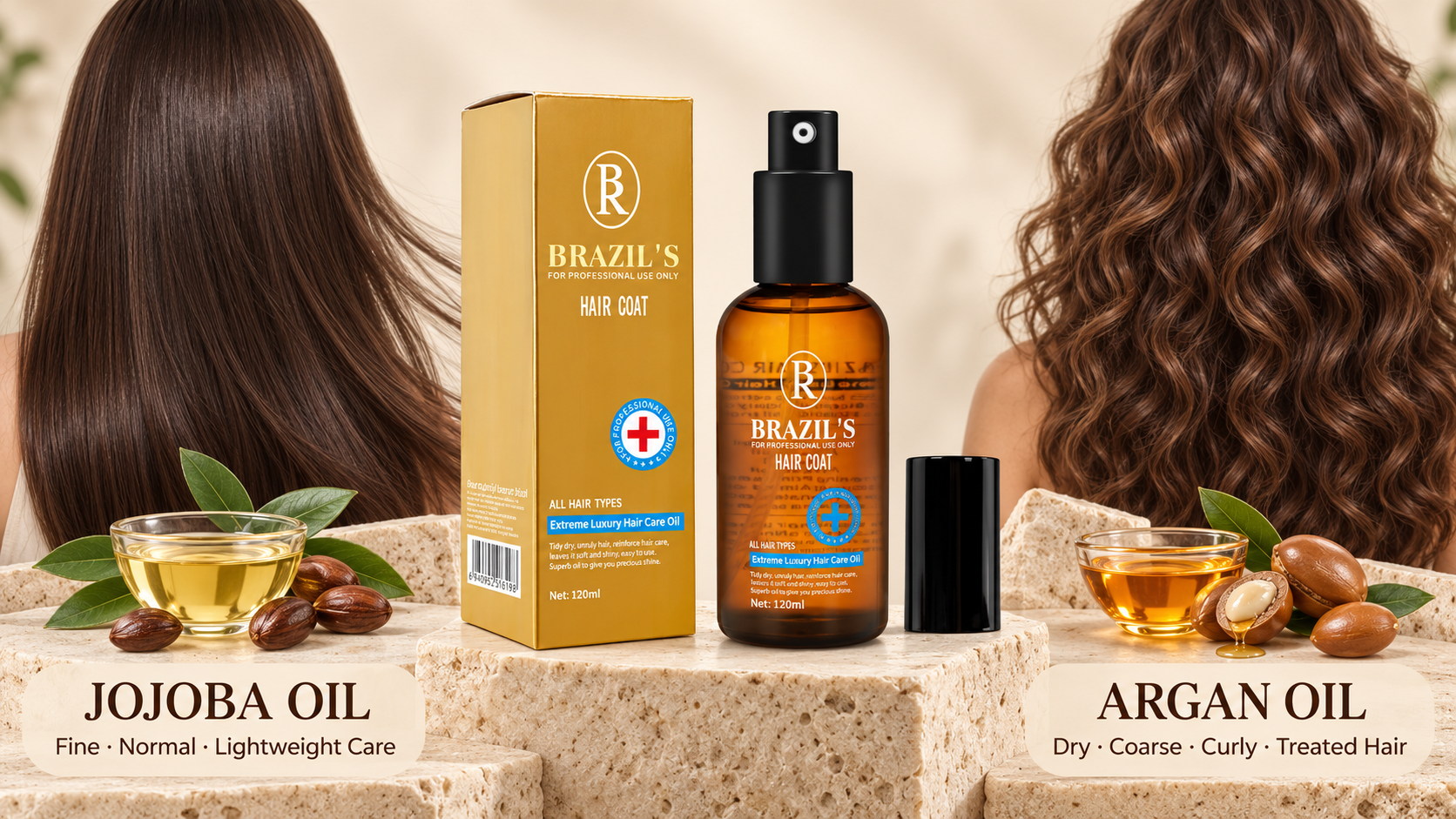
Fine or Easily Weighed-Down Hair
Jojoba oil is often a practical starting point for fine hair because it can provide softness without an overly rich finish.
Apply a small amount to the ends. If you prefer argan oil, begin with one drop and avoid the roots.
Dry, Coarse or Frizz-Prone Hair
Argan oil is usually the better choice when hair needs a richer conditioning feel. It can help the lengths appear smoother and give dry ends a more polished finish.
Jojoba oil can also be useful, but very dry hair may prefer an argan-rich formula.
Curly or Coily Hair
Argan oil works well for thick, coarse or dry curls that need additional softness and shine.
Jojoba oil may suit loose or fine curls that lose volume easily. A blend of both oils can provide a balanced finish without making the hair feel too heavy.
Colored or Heat-Styled Hair
Hair exposed to coloring, bleaching or regular heat styling may feel rough and difficult to manage. An argan oil serum can help improve softness and surface smoothness.
Hair oil should be part of a wider routine that includes gentle cleansing, conditioner and a suitable heat-protection product.
Can You Use Both Oils Together?
Yes. Argan oil and jojoba oil do not have to be competing ingredients.
A blended formula can combine the richer feel of argan oil with the smooth spreadability of jojoba oil. This approach works well in:
Daily hair serums
Leave-in treatments
Hair masks
Finishing oils
Pre-shampoo oils
For fine hair, the overall formula should remain light. Products designed for coarse or curly hair can use a richer oil blend.
How to Apply Hair Oil
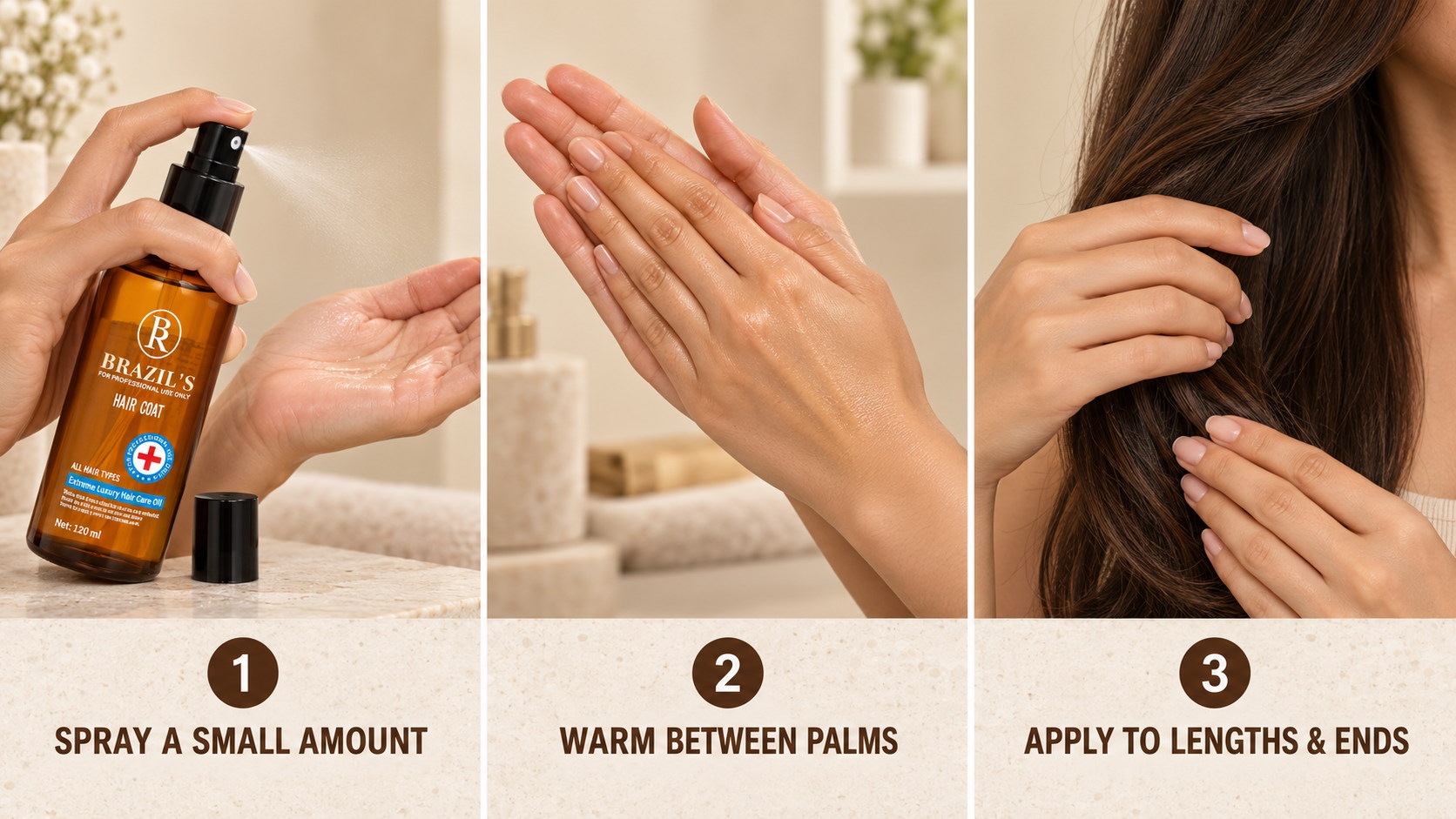
Using too much product is one of the main reasons hair oil feels greasy.
1. Start with one or two drops.
2. Warm the oil between your palms.
3. Apply it to the mid-lengths and ends.
4. Add more only if the hair still feels dry.
Apply oil to damp hair for more even distribution or use it on dry hair to smooth flyaways and add shine.
Avoid applying a concentrated finishing oil directly to the scalp unless the product is specifically designed for scalp use.
Is argan oil too heavy for fine hair?
Not always. Fine hair can use argan oil, but one drop may be enough. Keep it away from the roots to avoid reducing volume.
Is jojoba oil suitable for dry hair?
Yes. It can soften dry-feeling hair, although very coarse or porous hair may prefer a richer argan oil formula.
Can hair oil moisturize hair?
Hair oil does not add water. It mainly conditions and lubricates the surface, helping hair feel softer and look smoother.
Choose argan oil if your hair is dry, coarse, curly or frequently styled and you prefer a richer, shinier finish.
Choose jojoba oil if your hair is fine, easily weighed down or better suited to lightweight daily care.
If your hair sits somewhere between the two, a balanced blend may be the most practical choice. Start with a small amount and adjust according to how your hair feels rather than following a fixed number of drops.