How to Start a Private Label Hair Care Brand: A Practical Guide for 2026
Many new hair care founders begin with the same three things: a logo, a bottle they like, and a long list of fashionable ingredients.

That is a useful starting point, but it is not yet a product strategy.
A successful private label hair care brand needs a clearly defined customer, a focused product range, realistic cost planning and a manufacturer that can turn the original idea into something practical to produce and sell. Decisions about formulas, packaging, minimum order quantities and label requirements are closely connected. Changing one often affects the others.
If you are preparing to launch a shampoo, conditioner, hair mask, styling product or scalp care collection, the following steps will help you build the project on firmer ground.
1. Define the Customer Before Choosing the Formula
A common mistake is to begin with a broad description such as “a shampoo for all hair types.” It sounds flexible, but it gives the product developer very little direction.
A stronger product brief starts with a specific customer and use situation.
For example:
lFine hair that becomes oily quickly
lDry, frizz-prone or chemically treated hair
lCurly and coily hair that needs moisture and definition
lBlonde, silver or bleached hair with unwanted yellow tones
lWig wearers who need gentle cleansing and detangling
lSalon clients who regularly use heat styling tools
lMen looking for texture, volume and flexible hold
The clearer this customer picture becomes, the easier it is to make sensible choices about cleansing strength, conditioning level, texture, fragrance and packaging.
It also makes the marketing more believable. A focused product does not need to claim that it solves every possible hair concern.
2. Decide Which Manufacturing Model Fits Your Business
The terms private label, OEM and ODM are sometimes used interchangeably, but they can describe different levels of customization.
Private Label
Private label usually begins with an existing, tested formula. The brand customizes elements such as the logo, label, bottle, fragrance or product color.
This route is often suitable for startups because it can reduce development time and simplify sample approval.
OEM
OEM manufacturing normally means that the factory produces a product according to the buyer’s specifications. The buyer may provide a formula, ingredient requirements, packaging or detailed product standards.
This approach offers more control but may require a larger budget, additional testing and a longer development period.
ODM
With ODM, the manufacturer supports both product development and manufacturing. A buyer may arrive with a market concept rather than a finished formula, and the manufacturer helps develop the texture, fragrance, ingredient direction and packaging.
There is no universally “best” model. The right choice depends on how different the product needs to be, how quickly it must launch and how much the brand is prepared to invest in development.
3. Start With a Focused Product Line
Launching ten products at once may look impressive, but it also creates ten formulas, ten labels, multiple packaging components and considerably more inventory.
For a new brand, a smaller collection is usually easier to explain and manage.
A practical first range might include:
lShampoo and conditioner
lShampoo, hair mask and hair serum
lCurl cream, braid gel and hair oil
lWig shampoo, wig conditioner and detangling spray
lSea salt spray, styling clay and heat protectant
Each item should have a clear role in the routine. If two products perform almost the same function, one of them may not be necessary for the first launch.
A focused collection also makes it easier to create product photography, advertising materials, bundles and educational content without stretching the marketing budget too far.
4. Prepare a Useful Product Brief
A manufacturer can work more efficiently when the initial request contains more than a product name.
A useful product brief should cover:
lTarget customer and hair type
lMain product function
lPreferred texture and after-feel
lFragrance direction
lIngredients the brand wants to include or avoid
lPreferred bottle size and material
lTarget retail price
lExpected first order quantity
lTarget country or sales region
lPlanned sales channel
The sales channel matters more than many founders expect. A product designed for a professional salon may need a different size, dispensing system and visual style from one sold through Amazon, TikTok Shop or a supermarket chain.
If the budget is limited, say so early. A good manufacturer can suggest where customization will make a visible difference and where a standard component may be more practical.
5. Understand MOQ and the Real Cost of Launching
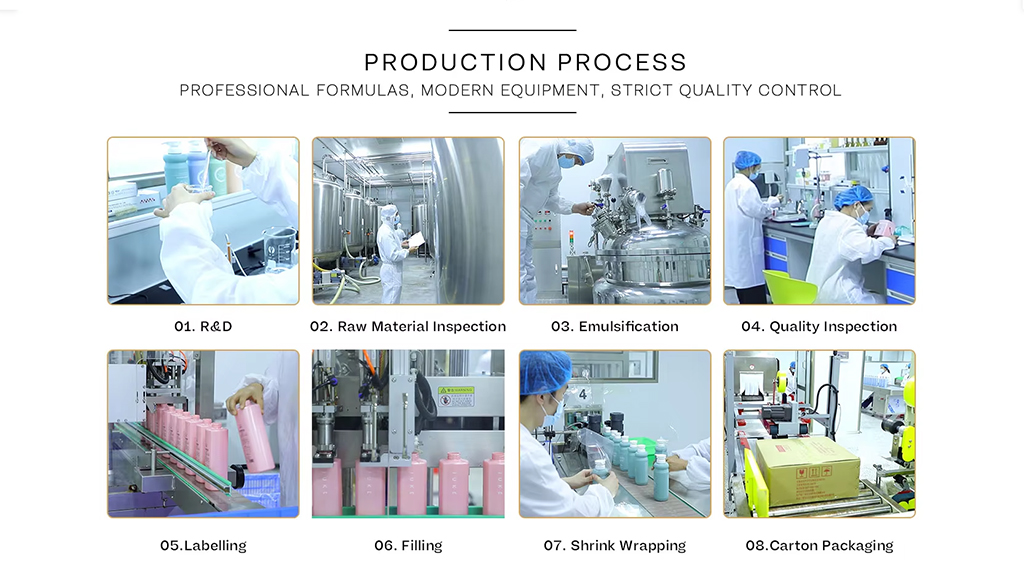
MOQ means minimum order quantity. It can apply to the finished product, but it may also apply separately to bottles, pumps, printed labels, cartons and special ingredients.
A low formula MOQ does not automatically mean the entire project has a low MOQ.
For example, a supplier may be able to fill a small production run, while a custom-colored bottle manufacturer requires a much larger order. In that situation, using a stock bottle with a customized label may be the more sensible first step.
Your budget should include more than the product price. Remember to consider:
lProduct samples
l Formula development
l Packaging components
l Label and carton printing
l Testing and documentation
l Shipping cartons
l International freight
l Import duties
l Product photography
l Website and marketing expenses
Ask for a clear quotation that explains what is included. A very low unit price can become less attractive after printing, packaging and freight are added.
6. Choose the Manufacturer Carefully
A professional website and an attractive quotation are useful, but they are not enough to evaluate a manufacturing partner.
Before placing an order, ask practical questions:
1. Does the factory manufacture the product directly?
2. Which parts of the process are completed by outside suppliers?
3. Can the manufacturer provide product samples?
4. What formula adjustments are available?
5. What is the MOQ for stock and custom packaging?
6. Which quality documents can be provided?
7. How is batch consistency checked?
8. Can the factory support label and packaging review?
9. What happens if a pump, bottle or label fails during testing?
10. How are production delays and quality issues handled?
It is also worth checking whether the supplier has experience with your product category. A factory that makes shampoo may not necessarily have the same experience with purple toning products, keratin treatments, styling clay or synthetic wig care.
Yafeila and YiMing provide formula, fragrance, texture, packaging and label customization for different hair care and styling categories. Buyers can review the available OEM/ODM customization services before preparing a project brief.

7. Treat Sampling as Product Development
Samples are not simply a formality before placing the order. They are where important product decisions are made.
Test each sample under realistic conditions. A shampoo should be evaluated for cleansing feel, foam, rinsing and the condition of the hair after drying. A conditioner or mask should be checked for spreadability, detangling, rinse feel and weight.
Styling products require different questions:
lDoes a sea salt spray provide enough texture without excessive stiffness?
lDoes a curl cream define hair without leaving visible residue?
lDoes a hair oil spread evenly without making fine hair look greasy?
lDoes a spray nozzle deliver a consistent mist?
lCan a pump handle the viscosity of the formula?
Keep written notes for every sample version. Comments such as “make it better” are difficult to act on. Feedback such as “reduce the fragrance strength and make the after-feel lighter on fine hair” is much more useful.
Avoid approving a formula after testing it on only one person. Whenever possible, test it on several people whose hair types match the intended customer.
8. Develop the Packaging Alongside the Formula
Packaging is not merely decoration. It affects product use, shipping, leakage risk and customer perception.
A thick hair mask may work well in a jar but poorly through a narrow pump. A lightweight scalp serum may need a targeted nozzle. A travel product needs a secure closure, while a salon-size shampoo requires a pump that can withstand frequent use.
Key packaging decisions include:
lBottle or jar material
lCapacity
lPump, cap, nozzle or dropper
lTransparent, frosted or solid color finish
lPrinted bottle or adhesive label
lOuter carton
lShipping protection
Do not approve packaging only from a photograph. Request physical samples and test them with the actual formula whenever possible.
Check the pump, closure, label adhesion and bottle stability. Products should also be observed after being stored upright, on their side and under different temperature conditions.
9. Keep the Label Clear and Supportable
A beautiful label can still create problems if it contains unsupported claims or incomplete information.
Exact requirements depend on the country where the product will be sold, so the target market should be identified before the artwork is finalized.
A typical label may need:
lProduct identity
lNet contents
lIngredient list
lUsage instructions
lWarnings where applicable
lBatch or traceability information
lResponsible company information
lCountry-specific regulatory details
Marketing language should match the formula and available evidence. Avoid adding a long list of claims simply because competitors use them.
Terms such as “organic,” “natural,” “anti-hair loss,” “clinically proven,” “hypoallergenic” or “repairs hair permanently” may require evidence or additional review. For scalp treatments, dandruff products, hair growth products and products containing regulated active ingredients, professional compliance advice is especially important.
A more restrained claim is often easier for customers to understand and more credible over time.
10. Approve a Final Pre-Production Sample
Before mass production, confirm the complete product rather than approving the formula, bottle and label separately.
The final approval sample should reflect:
lApproved formula
lFinal fragrance and color
lCorrect bottle and closure
lFinal label artwork
lBatch coding position
lOuter packaging where applicable
Check spelling, product volume, directions, ingredient presentation and barcode details carefully. Small artwork errors become expensive once thousands of labels or cartons have been printed.
Both the buyer and manufacturer should retain an approved reference sample. This gives both sides a clear standard for appearance, fragrance, texture and packaging during production.
11. Plan the Launch Before Production Is Finished
Do not wait for the finished goods to arrive before thinking about marketing.
While production is underway, prepare:
lProduct photography
lUsage instructions
lIngredient explanations
lFrequently asked questions
lWebsite product pages
lWholesale price lists
lSample kits
lSocial media content
lEmail campaigns
lSalon or distributor materials
Good marketing explains who the product is for, how it fits into a routine and what makes it different. It does not simply repeat the ingredient list.
If the product is designed for oily roots and dry ends, show how it should be applied. If it is intended for wig care, explain why normal shampoo may not provide the same experience. If it is a styling product, demonstrate the amount, application distance and finished look.
Frequently Asked Questions
How much does it cost to start a private label hair care brand?
The cost depends on the number of products, order quantity, formula customization, packaging and target market. A focused collection using tested formulas and stock packaging is generally less expensive than a fully custom range.
Can I start with only one product?
Yes. A strong hero product can be a sensible way to test the market. Hair masks, scalp serums, sea salt sprays, curl products and wig care sprays can all work as standalone starting products when the positioning is clear.
Do I need a custom formula?
Not always. An existing formula may be suitable if it matches your target customer and can be adjusted in fragrance, texture or appearance. Custom development becomes more useful when the brand requires a distinctive performance profile or ingredient direction.
How long does private label production take?
Timing varies according to formula development, sample revisions, packaging availability, label approval and order quantity. Custom bottles and cartons usually require more time than stock packaging.
Should I choose the cheapest manufacturer?
Price matters, but it should be considered together with communication, sample quality, documentation, packaging support, consistency and problem-solving ability.
Final Thoughts
Starting a private label hair care brand is not only about putting a logo on a bottle. It is a sequence of connected decisions: understanding the customer, defining the product, selecting a formula, testing samples, confirming packaging and preparing the product for its target market.
The projects that move most smoothly are usually not the ones with the biggest ingredient lists or the most complicated packaging. They are the ones built around a clear customer and a realistic commercial plan.
If you are developing a shampoo, conditioner, hair mask, scalp treatment, styling product or wig care collection, explore our hair care product catalog or review the OEM/ODM development process.
You can also contact the Yafeila and YiMing team to discuss product samples, formula options, packaging and private label requirements.